Dear parent, are you in two minds whether your child has an eye problem or not? Are you confused about detecting the eye problem at home and when to consult an eye specialist doctor? Let me assist you with this.
I enumerated a few tips that may guide you to pick up an eye problem with your child at an early stage.
Kindly note that I have not listed all the hereditary or genetic conditions associated with eye problems.
Table of Contents
Vision problem
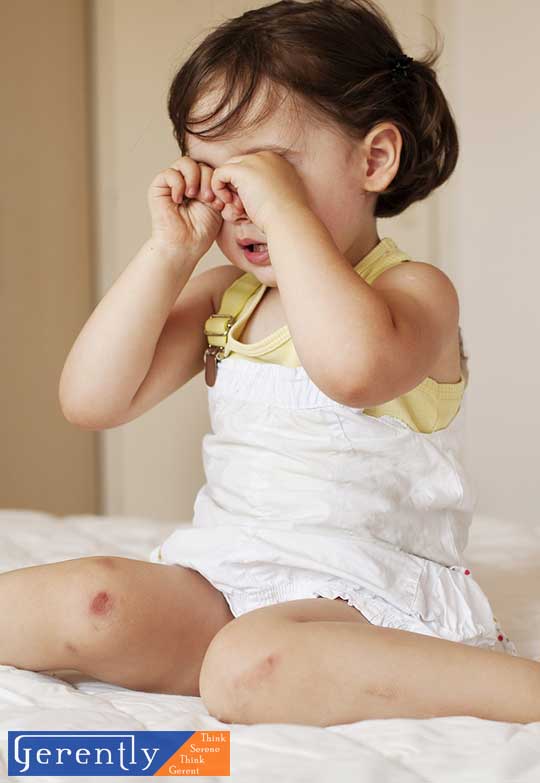
Whether your child has any low vision? Does your child have a Refractive error? Does your child need spectacles? It can be picked up early in infancy.
The easy tip for finding out this is to cover one eye of your child at a time. The child will cry or move away from the head or prevent you from covering its better-seeing eye.
Does your child have watering eyes or frequent rubbing of eyes? It should raise your suspicion of an eye problem.
Inability to focus
Try showing a photo, a toy, a bright light in front of your child. Usually, the child looks at it with both eyes straight. But an inability to focus straight will have head tilt or face moved vertically or horizontally or misalignment of the eyes should raise a suspicion of an eye problem.
Excessive movement of eyeballs
Nystagmus is the term for the dancing eyeballs or the excessive movement of eyeballs. It can be detected immediately if present at birth or can develop later within a few months. It should raise a suspicion to consult an eye doctor.
White reflex in center
An observant parent notices a white glow or dot or reflex in the center of one or both eyes of the child. With it, there could be an inability to focus or excessive movement. One needs to consult an eye doctor as early as possible. The white reflex could indicate either the natural lens problem or the vitreoretinal issue.
Reluctant to go in dark, frequent falls in the dark
Raise a suspicion when the child is unwilling to go in dark, avoids going alone in a dark room or misses the way in dark, frequently falls or tumbles in the dark. The child could be having a night vision problem. Here the pediatrician and the eye doctor as a team play the role.
Unable to choose a different colour
The child from around 18 months of age starts learning about colours. Give some time to your child to grasp and understand the colours. As the child grows to 5yrs and has colour identification or differentiation problem, raise suspicion of colour vision problem.
Consult an eye doctor to rule out if it’s genetic or due to any eye pathology. If the colour vision problem is confirmed, it helps decide future activities of life during academics, selection of profession, shopping, travelling, and prevents the embarrassing situation in daily routine life.
Delayed milestones, slow learner

Is your child slow in grasping things, a slow learner in school, does a lot of spelling mistakes while copying from distant boards?
Besides the mental ability conditions, there could be an eye problem also. Raise a suspicion of eye problems, which could be causing vision or focusing problem leading to slow or inability to identify objects.
Malingering, attention seeker
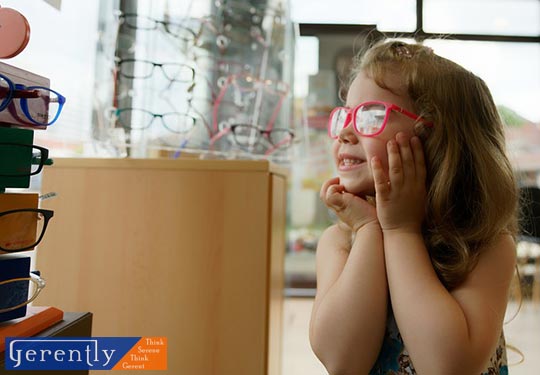
Children often do an act to seek attention or behave under peer pressure.
Does your child out of the blue demands spectacles because some of their school friends have one? Or does your child, once having spectacle, now avoids using it because of fear of bullying?
The child could enact having vision problems, blinks frequently, and rubs eyes often when surrounded by people gaining attention or sympathy. Observe your child’s behaviour when alone or in the company. Understanding the child’s emotions and counseling accordingly usually solves this problem.
Final thoughts
When you approach an eye doctor for a consultation about your child’s eye problem, you may be advised for further investigations, treatment, or other specialists like neurology, vitreoretinal, psychology, and paediatric.
So, sometimes more than one faculty is involved together as a team to manage your child’s eye condition and overall health.
As a parent, you may not come across any of the above conditions, or you may find something different, and you feel to be sure about your child’s eyes’ health condition, do not hesitate to follow your gut feeling and approach an eye doctor.
It is better to be cautious than sorry.
You may also like to read:
Aging Gracefully – Are You In Terms With Aging (The Inevitable)?
What really matters in life?
